git-internals-objects-and-refs.md
Git Internals: Objects, Refs, and the DAG Under the Hood
Git isn't a filesystem with history it's a content-addressed object database with labels. Once you see the DAG, everything clicks.
- Git
- Tools
- DevOps

git commit feels like saving a file. Under the hood, Git stores snapshots as hashed objects in .git/objects/ a Merkle DAG where branches are just movable pointers.
Four object types
| Type | Contains |
|---|---|
| blob | File contents |
| tree | Directory listing (names → blob/tree hashes) |
| commit | Tree hash + parent + author + message |
| tag | Annotated pointer to commit |
Everything keyed by SHA-1 (or SHA-256 in newer repos):
blob a1b2c3... → "console.log('hi')"
tree d4e5f6... → { "README.md": blob_a1b2, "src/": tree_789 }
commit 789abc... → { tree: d4e5f6, parent: 456def, msg: "init" }
Refs are labels
refs/heads/main→ latest commit on mainrefs/remotes/origin/main→ last fetched remote tipHEAD→ usuallyref: refs/heads/main
Branches aren't folders. They're 40-character filenames containing one hash.
# Peek under the hood
git cat-file -p HEAD
git ls-tree HEAD
git rev-parse main
The DAG
Commits form a directed acyclic graph. Merge commits have two parents. Rebase rewires parent pointers same patches, new commit hashes.
    A---B---C  main
         \
          D---E  feature
git merge feature creates commit F with parents C and E.
Staging area (index)
The index is a tree snapshot of your next commit between working directory and repository. git add updates index entries; git commit freezes index into a tree object.
Why this matters
- Reflog orphaned commits survive until GC
- Cherry-pick applies patch, new commit hash
- Shallow clone truncates history, not objects
- Partial clone lazy-fetches missing blobs
[!TIP]
git gcpacks loose objects. Nothing is truly deleted until unreachable and garbage-collected.
Takeaway
Git is a content-addressed snapshot store with cheap branching. Files are blobs. Directories are trees. History is a DAG. Everything else rebase, merge, stash is pointer manipulation on that graph.
Related
Continue reading
More notes on similar topics.
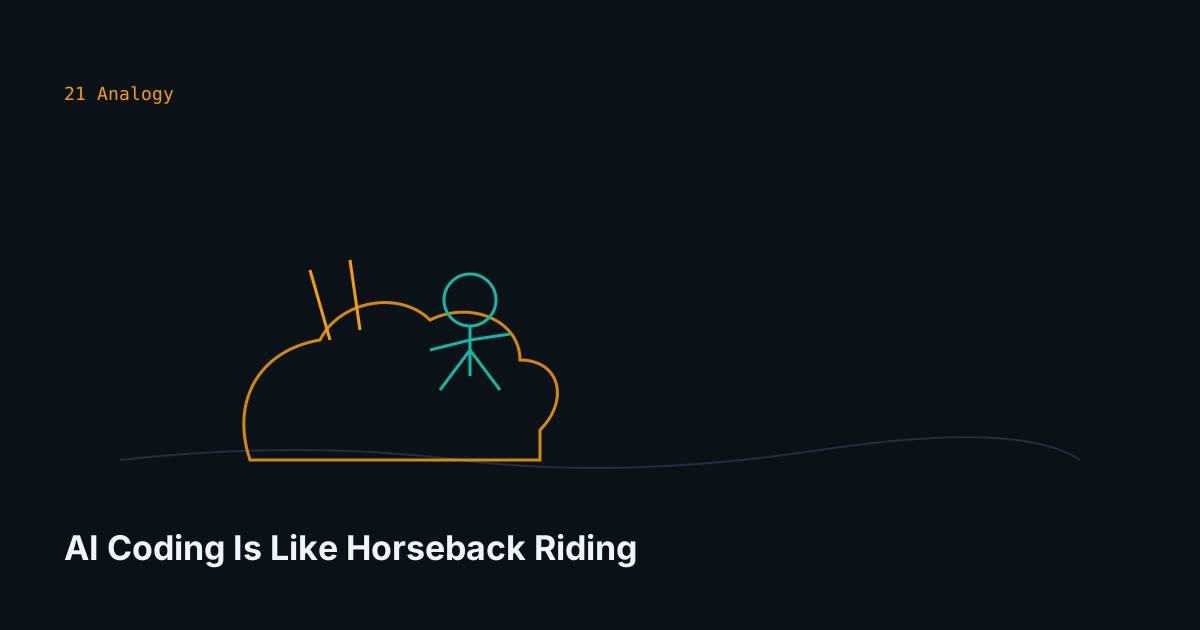
The horse is doing the running. You're still the one who has to stay balanced, read the terrain, and not fall off. That's the whole difference between vibe coding and actually directing the thing.
- AI Engineering
- Vibe Coding

The Day the Facility Guy Shipped a Feature to My App
July 29, 2026
I taught our building's maintenance guy how to vibe code for fun. Twenty minutes later he'd chatted his way into a working feature inside one of my real apps. Here's what actually happened, and why it didn't disprove anything I've written in this series.
- AI Engineering
- Vibe Coding
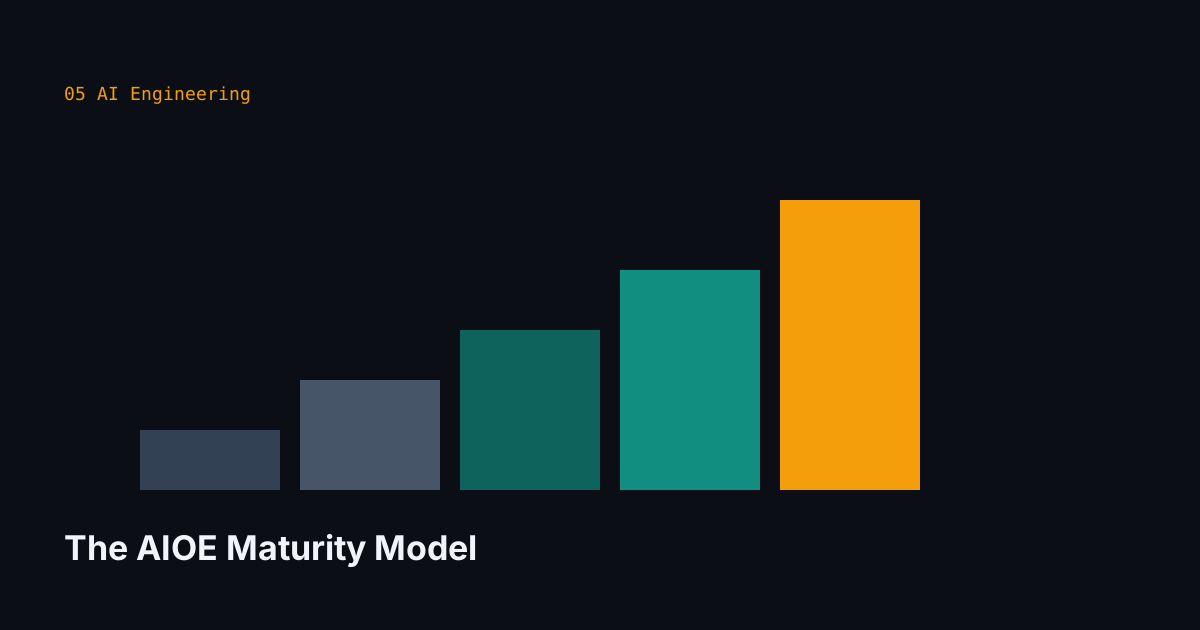
A five-level, self-scoring checklist to find out honestly whether your AI-assisted workflow is AI-Orchestrated Engineering or vibe coding with extra steps.
- AI Engineering
- Engineering Philosophy