privacy-first-analytics.md
Privacy-First Analytics Without the Tradeoffs
Building Analytick taught me that you can have real-time dashboards and respect user privacy if you design constraints in from day one.
- Analytics
- Privacy
- SaaS
Google Analytics is free because you are the product. Privacy-first analytics flip the model: you pay for infrastructure, users keep their data.
What "privacy-first" actually means
Marketing teams throw the term around. For Analytick, it means concrete choices:
- No cross-site tracking one site, one dataset
- No fingerprinting hash IPs, discard raw values quickly
- Minimal cookies session counts without persistent IDs where possible
- Data residency options important for teams in Iran and EU-adjacent compliance
These aren't checkboxes. Each one changes your schema and aggregation pipeline.
Real-time without invasive collection
Teams want dashboards that update in seconds. That pushes you toward event streams. The privacy tension: events need identifiers.
Our approach:
// Client   lightweight, no PII
analytick.track("pageview", {
  path: location.pathname,
  referrer: document.referrer || null,
});
Server-side, we aggregate before storage. Individual sessions expire; trends remain.
GDPR isn't optional for growth
Even if your first customers aren't in the EU, building GDPR-aligned practices early saves painful retrofits:
- Document what you collect and why
- Provide export and deletion paths
- Default to the least data that answers the question
The MVP lesson
Analytick's MVP focused on three screens: live visitors, top pages, referrers. Everything else waited until someone asked twice.
Privacy-first doesn't mean feature-poor. It means every feature justifies its data cost.
Further reading
If you're evaluating analytics tools, ask vendors:
"What happens to raw events after 24 hours?"
The answer tells you whether privacy is architecture or wallpaper.
Related
Continue reading
More notes on similar topics.
The horse is doing the running. You're still the one who has to stay balanced, read the terrain, and not fall off. That's the whole difference between vibe coding and actually directing the thing.
- AI Engineering
- Vibe Coding
The Day the Facility Guy Shipped a Feature to My App
July 29, 2026
I taught our building's maintenance guy how to vibe code for fun. Twenty minutes later he'd chatted his way into a working feature inside one of my real apps. Here's what actually happened, and why it didn't disprove anything I've written in this series.
- AI Engineering
- Vibe Coding
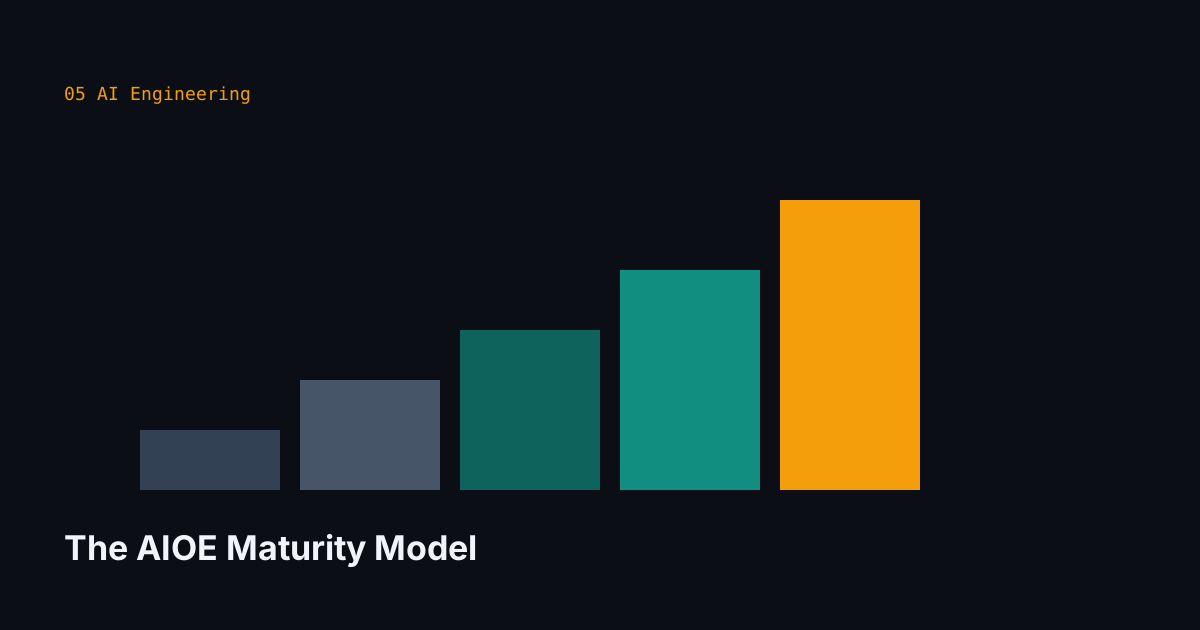
A five-level, self-scoring checklist to find out honestly whether your AI-assisted workflow is AI-Orchestrated Engineering or vibe coding with extra steps.
- AI Engineering
- Engineering Philosophy